Visionaries
The individuals whose talent, conviction, and labour made the impossible towers real.
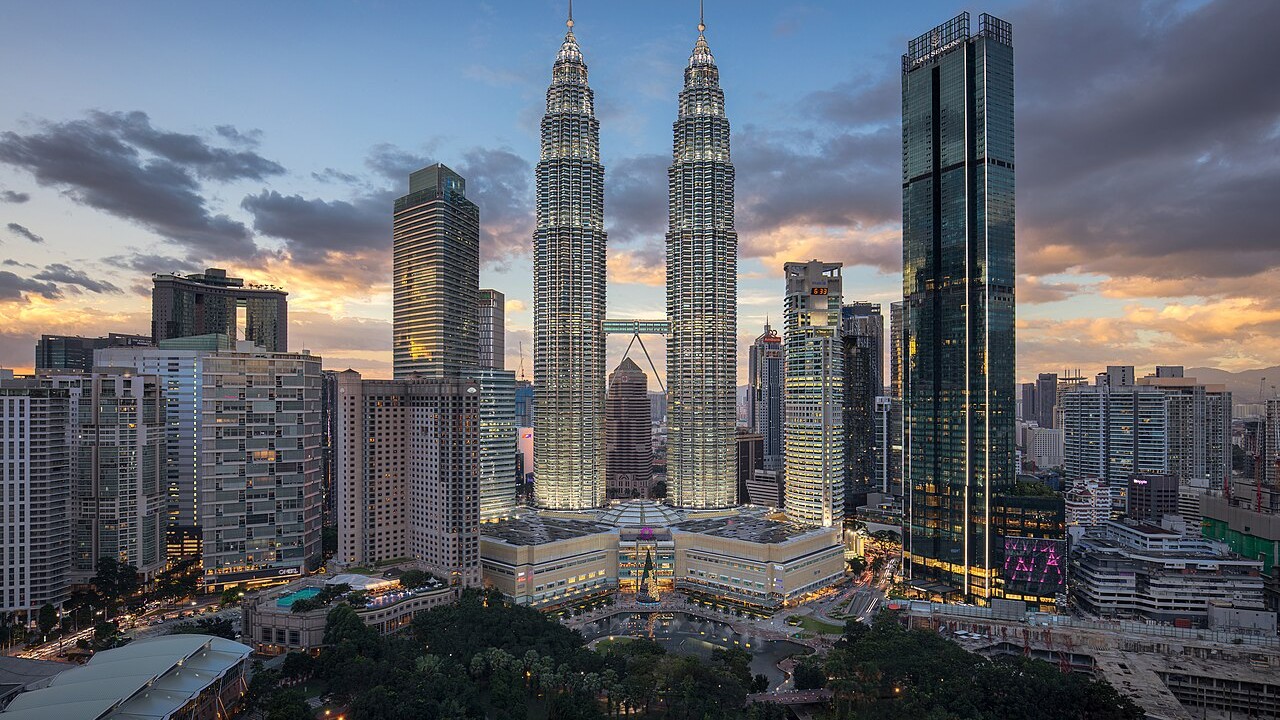
A Gathering of Extraordinary Minds
What makes the Petronas Twin Towers remarkable is not merely their height but the breadth of human talent assembled to create them. The project brought together a prime minister with a civilisational vision, an Argentine-born architect who found poetry in geometry, an American engineer who believed concrete could touch the sky, a Malaysian architect who ensured cultural authenticity, and a Brazilian artist who imagined a rainforest where horses once ran. Add seven thousand workers from twenty nations, and the result is one of history\'s most remarkable collaborations — a building project that reads like a novel.
The Principal Characters
Each played an irreplaceable role in bringing the twin towers from dream to reality.
Mahathir Mohamad
The Political Dreamer
Malaysia's fourth Prime Minister saw the towers not as mere buildings but as an argument — an argument that a developing Muslim-majority nation could create something the world had never seen. His insistence on Islamic design motifs and Malaysian materials transformed what could have been a generic supertall into a culturally resonant masterpiece. He chaired the design jury personally and remained the project's most passionate advocate throughout construction.
César Pelli
The Architect of Icons
Born in Tucumán, Argentina, Pelli brought a lyrical sensibility to skyscraper design that few contemporaries could match. His eight-pointed star concept for the floor plan was elegant in its simplicity: rooted in centuries-old Islamic geometry yet perfectly adapted to the practical demands of a modern office tower. Pelli described the completed towers as his proudest work, calling them "a dialogue between tradition and technology."
Charles Thornton
The Structural Innovator
As co-founder of Thornton Tomasetti, he championed the controversial decision to build in reinforced concrete rather than steel. His team's tube-in-tube structural system proved that concrete could reach heights previously reserved for steel construction, while delivering superior wind-damping performance. He also designed the ingenious pin-jointed Skybridge system that allows the two towers to move independently.
Hijjas Kasturi
The Cultural Bridge
As local architect of record, Hijjas ensured that Pelli's vision was realised with authentic Malaysian cultural sensitivity. His firm navigated local building codes, material specifications, and construction practices, serving as the essential bridge between international design ambition and Malaysian construction reality. His own architectural career has been defined by blending modern forms with tropical and Islamic design principles.
Roberto Burle Marx
The Landscape Master
The legendary Brazilian landscape architect, in one of his final commissions before his death in 1994, designed the 50-acre KLCC Park at the base of the towers. His vision of a "tropical forest in the city" has matured over 25 years into a lush urban oasis that provides essential green relief in Kuala Lumpur's dense urban core. The park's lake, fountains, and native plantings are inseparable from the towers' identity.
The 7,000 Workers
The Human Foundation
Behind every engineering calculation and design flourish stood a multinational workforce of over 7,000 individuals — from Japan, South Korea, Indonesia, Bangladesh, India, and Malaysia itself. They poured concrete in 35-degree heat, welded steel at 400 metres above ground, and installed 83,000 square metres of glass curtain wall per tower. Their collective labour, spanning six years of construction, is the true foundation of the Petronas Twin Towers.