Landmark Moments
The pivotal chapters in a story that spans from colonial horse-racing ground to global architectural icon.
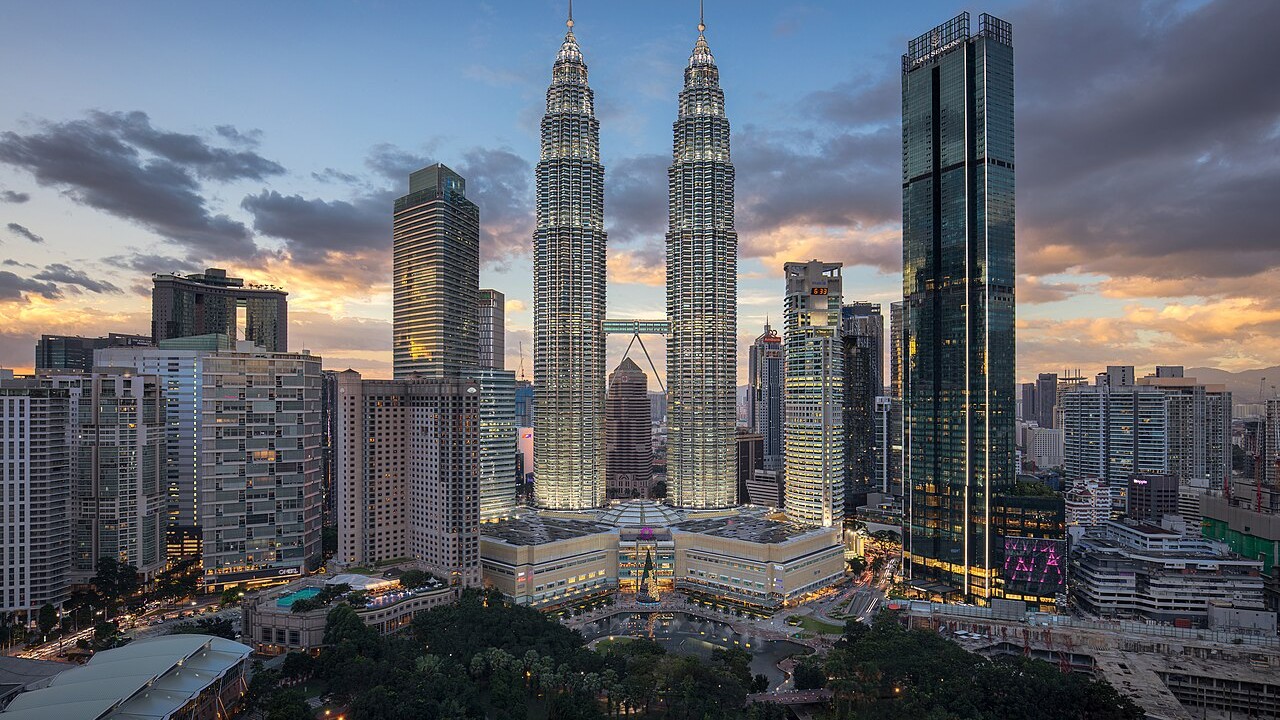
The Competition That Changed Malaysia
Eight of the world's most celebrated architects submitted competing visions for the KLCC towers. César Pelli's entry, with its revolutionary Islamic star floor plan, was selected by a jury chaired by Prime Minister Mahathir. The moment the design was chosen, the towers' cultural DNA was set: these would not be generic glass monoliths but buildings that spoke in the visual language of Malaysia's Islamic heritage.
The Ground Shifts Beneath Their Feet
Geotechnical surveys revealed that bedrock beneath the planned tower sites plunged unevenly to depths exceeding 200 metres. The entire building footprint was relocated 60 metres southeast — a dramatic decision that required redesigning underground infrastructure already in progress. The foundation engineering that followed produced some of the deepest building piles ever driven, each one a testament to engineering determination.
A Bridge Between Two Giants
The 750-tonne Skybridge was assembled at ground level and then lifted in two halves to its final position 170 metres above the street, in a single weekend operation requiring millimetre precision. The bridge's revolutionary pin-jointed connection system — allowing the two towers to sway independently during storms — was a world first in skybridge engineering and remains an object of admiration among structural engineers.
Claiming the Crown of the World
With the installation of the 73.5-metre stainless steel pinnacles, the Petronas Twin Towers reached 451.9 metres and officially became the tallest buildings on Earth, ending an American monopoly on the title that had lasted since 1913. For Malaysia, the moment was electric: a developing Southeast Asian nation had built something no other country had achieved. The celebration in Kuala Lumpur was spontaneous and emotional.
Defiance During the Financial Storm
As the Asian financial crisis ravaged regional economies, many predicted the towers would become Malaysia's most expensive white elephant. Instead, PETRONAS moved into Tower 1 as planned, and corporate tenants continued leasing space in Tower 2. The towers' completion during economic turmoil transformed them from a symbol of ambition into a symbol of resilience — a distinction that deepened their cultural significance immeasurably.
Inauguration Day
On 28 August 1999, Mahathir Mohamad stood beneath the Skybridge and formally inaugurated the completed towers before an international audience. The ceremony was simultaneously a celebration and a statement of recovery — Malaysia had weathered the crisis and emerged with its grandest project intact. The towers officially opened their doors to public visitors, beginning a new chapter as one of Southeast Asia's premier tourist destinations.
Surpassed in Height, Never in Spirit
Taipei 101's completion at 509 metres ended the Petronas towers' reign as the world's tallest. But the reaction in Malaysia was sanguine rather than dismayed. The towers had already transcended their height record to become something more durable: a national symbol. They remain the tallest twin towers on Earth — a record no competing project has seriously challenged — and their cultural significance only grows with each passing decade.
A Quarter Century of Standing Tall
Twenty-five years after inauguration, the Petronas Twin Towers have hosted over 40 million visitors, anchored one of Southeast Asia's most successful mixed-use developments, and become arguably the most photographed structures in the Islamic world. The towers that were once questioned as excessive have become indispensable — to Malaysia's economy, to Kuala Lumpur's identity, and to the global imagination of what is possible when cultural heritage meets modern ambition.